Ever wonder what happens when a major beer brand simply vanishes from store shelves? The story of bud dry naturally reveals how quickly consumer tastes can change and why even successful products sometimes disappear forever. This deep dive explains the rise and fall of a forgotten Budweiser family member, from its innovative brewing process to the market forces that sealed its fate in 2010.
What happened to bud dry?
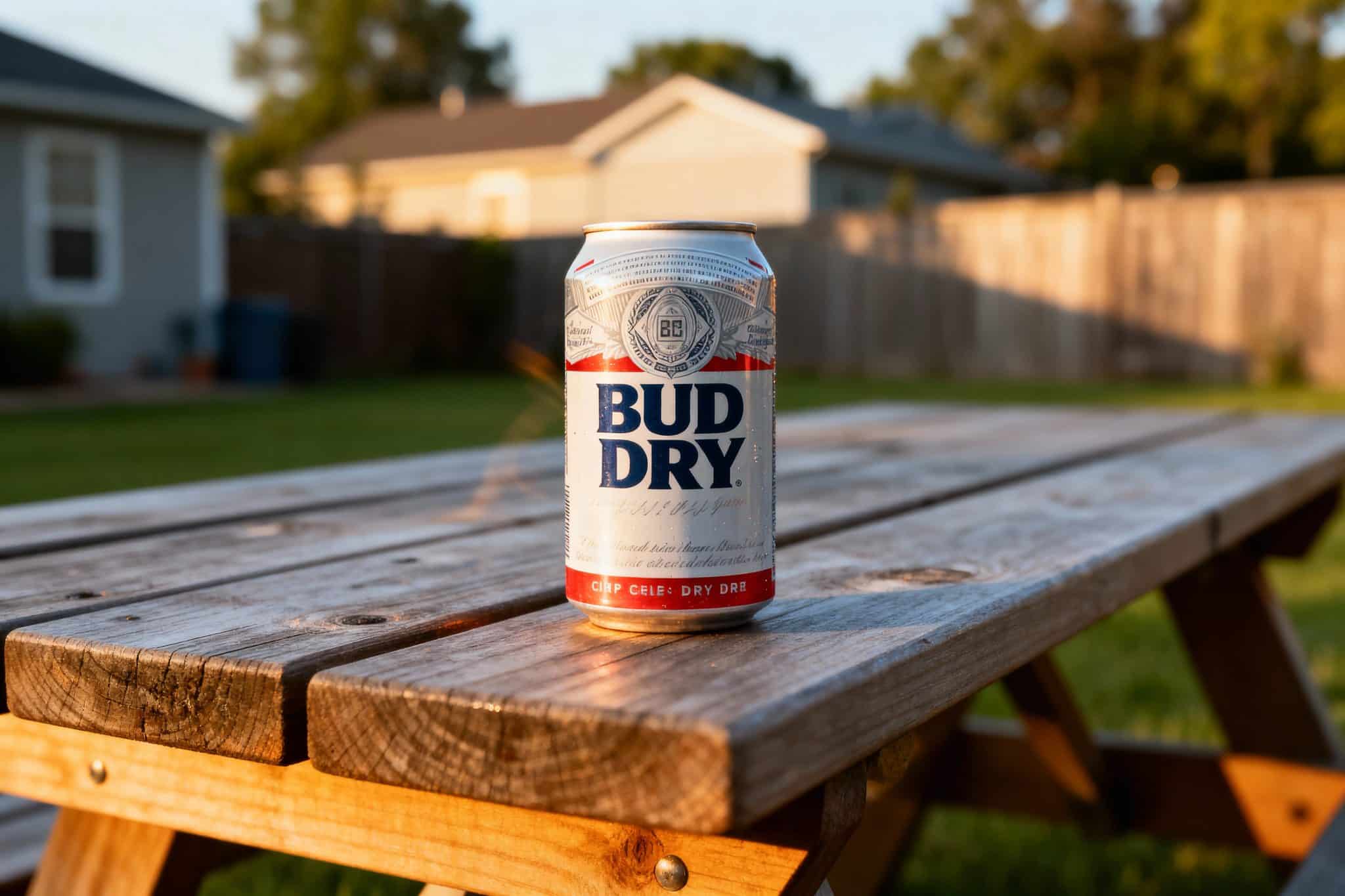
Bud Dry was discontinued in December 2010 after a 20-year run as part of the Budweiser family. This forgotten beer met its end due to declining sales, shifting market trends, and intense competition from other products within Anheuser-Busch’s own lineup.
The dry beer craze that swept America in the late 1980s and early 1990s couldn’t sustain itself long enough to keep this product profitable. By 2010, bud dry had become a shadow of its former self, overshadowed by newer introductions like Bud Ice and struggling to maintain its market position.
What makes this story particularly interesting is how quickly consumer preferences shifted away from dry beers. The same market forces that propelled Bud Dry to national prominence eventually led to its quiet removal from store shelves across America.
Origins and the DryBrew era in the Budweiser family
Anheuser-Busch launched Bud Dry nationally in April 1990, riding the wave of dry beer popularity that had swept across Japan and was gaining traction in the United States. The timing wasn’t accidental – Michelob Dry had already proven successful since its 1988 introduction, showing there was appetite for this style.
The secret behind Bud Dry’s distinctive taste lay in Anheuser-Busch’s proprietary DryBrew process. This technique involved extended fermentation periods that allowed yeast to consume more sugars than traditional brewing methods. The result was a beer with less residual sweetness and a notably crisp, dry finish.
This brewing innovation positioned Bud Dry as something genuinely different within the Budweiser family. While Budweiser offered the classic American lager taste and Bud Light provided fewer calories, Bud Dry carved out its own niche with a flavor profile that appealed to drinkers seeking something less sweet and more refreshing.
Marketing gambits and the rise and fall of Bud Dry
The marketing strategy for Bud Dry reflected the experimental spirit of early 1990s advertising. Anheuser-Busch positioned it as one of three premier brands alongside Budweiser and Bud Light, giving it significant promotional support during its early years.
Sales figures from the first year were impressive, with reports indicating around 3.2 million barrels sold. This strong debut suggested that American beer drinkers were ready to embrace the dry beer trend that had already conquered international markets.
Bud Dry branding and the « Why ask why » campaign
The iconic tagline « Why ask why? Try Bud Dry » became synonymous with the brand’s irreverent marketing approach. This slogan emphasized the beer’s unique dry profile while encouraging consumers to experience the difference rather than overthink it.
The campaign’s boldness extended beyond simple advertising copy. Bud Dry made a memorable appearance in the 1991 Bud Bowl III as the starting quarterback and « Top Draft Choice » for Bud Light, cementing its place in Anheuser-Busch’s marketing mythology.
Yet this same marketing approach would later face criticism for its overt approach and failure to create lasting cultural impact. The « Why ask why » campaign, while memorable, couldn’t overcome the fundamental challenge of maintaining consumer interest in dry beer over the long term.
Bud Dry legacy in the Budweiser lineup
Within the Budweiser portfolio, Bud Dry served a specific purpose: attracting new drinkers who might find regular Budweiser too sweet or heavy. The beer’s crisp profile and weaker finish made it appealing to those transitioning from other beverage categories or seeking lighter drinking experiences.
The introduction of Bud Ice in 1994 marked a turning point for Bud Dry’s prominence within the lineup. This stronger, higher-alcohol alternative began receiving more marketing attention and resources, gradually pushing Bud Dry toward the margins of Anheuser-Busch’s promotional efforts.
We advise looking at this period as a classic example of brand cannibalization, where companies inadvertently compete against themselves by introducing too many similar products targeting overlapping consumer segments.
Why Bud Dry was discontinued and the 2010 departure
The discontinuation of Bud Dry resulted from a perfect storm of market forces and internal company dynamics. Declining profitability became impossible to ignore as sales continued dropping year after year throughout the 2000s.
Several key factors contributed to this decline:
- Shifting consumer preferences away from dry beers toward craft and premium options
- Internal competition from Bud Ice, Budweiser Ice, and other Anheuser-Busch products
- Excess product segmentation within the Budweiser brand family
- Marketing resources redirected toward more profitable product lines
By 2010, the writing was on the wall. The beer that once sold millions of barrels annually had become a niche product with a loyal but dwindling consumer base. Its Beer Advocate rating of around 57 reflected its position as a middle-tier option in an increasingly competitive marketplace.
The December 2010 discontinuation happened quietly, without the fanfare that had accompanied its 1990 launch. This low-key exit reflected how far Bud Dry had fallen from its early prominence within the Anheuser-Busch lineup.
The legacy and cultural memory of Bud Dry
Today, Bud Dry occupies a unique space in American beer history as the « Forgotten King of Beers. » This nickname captures both its brief period of prominence and its subsequent fade into obscurity, making it a fascinating case study in product lifecycle management.
Online petitions requesting its return have circulated among beer enthusiasts, though Anheuser-Busch has not responded to these grassroots efforts. The fact that people still actively campaign for its return speaks to the genuine connection some consumers developed with this distinctive brew.
The story of Bud Dry illustrates how market trends, marketing effectiveness, and product positioning can dramatically influence a beer’s longevity. What seemed like a sure bet in 1990 – capitalizing on the dry beer craze – couldn’t sustain itself against changing consumer preferences and evolving market dynamics.
For beer industry observers, Bud Dry represents both an innovation success and a cautionary tale. Its DryBrew process showcased Anheuser-Busch’s technical capabilities, while its eventual discontinuation demonstrated the challenges of maintaining relevance in America’s rapidly changing beer landscape.
Frequently Asked Questions
Why did they discontinue Bud Dry?
They discontinued Bud Dry due to declining sales and shifting consumer preferences, particularly as craft beer gained popularity. The beer became less profitable, overshadowed by other Anheuser-Busch products and unable to compete against market changes.
Does Bud Dry still exist?
Bud Dry does not still exist, as it was discontinued in December 2010 after 20 years on the market. The decision reflected the beer’s declining popularity and profitability amidst changing consumer tastes.
What did Bud Dry taste like?
Bud Dry tasted crisp and refreshing, thanks to the DryBrew process that resulted in less sweetness and a dry finish. It was designed to appeal to drinkers looking for a lighter alternative to traditional lagers.
What is a Bud Dry?
A Bud Dry is a dry beer produced by Anheuser-Busch, launched in 1990 and known for its unique brewing process. It aimed to provide a less sweet and more refreshing alternative to traditional Budweiser and Bud Light, positioning itself within the dry beer trend.
What market changes contributed to Bud Dry’s decline?
Market changes contributing to Bud Dry’s decline included a shift in consumer preferences toward craft beers and premium options, as well as internal competition from newer products within Anheuser-Busch’s lineup, which ultimately overshadowed Bud Dry.
How did Bud Dry’s marketing strategy impact its legacy?
Bud Dry’s marketing strategy impacted its legacy by positioning it as a unique option through memorable campaigns like « Why ask why? » It initially attracted consumers but later faced challenges in maintaining lasting appeal amidst evolving market trends.

Jack Mercer is a writer with a passion for American culture and everyday style. After spending years exploring the country’s hidden gems and fashion scenes, he found his voice sharing stories that celebrate the authentic spirit of modern America. When he’s not writing, you’ll find him hunting for vintage denim or enjoying a good bourbon on his front porch.