Key takeaways:
Repairing jeans with knee patches requires patches extending at least 1 inch beyond damage for effective reinforcement. Utilizing heavyweight denim or fabrics like twill ensures patch durability under stress and repeated washing. Proper tools such as sewing machines with zigzag stitch improve edge security, preventing fraying and peeling over time.
Do worn knees in denim frustrate your wardrobe longevity? Knee patches on jeans often face constant abrasion, making fabric selection and preparation crucial to prevent quick wear and puckering. Integrating the right sewing methods and finishing techniques optimizes repair strength and resilience. By mastering these practical steps, you can confidently extend the life of your jeans with knee patches while maintaining comfort and appearance.
Repair Basics for Jeans With Knee Patches
When repairing jeans with knee patches, choosing the right patch size is essential for a durable fix. Experts recommend cutting patches that extend at least 1 inch beyond the edge of the hole or worn area. This extra space helps prevent new tears and adds strength to the repair. Using sturdy denim or heavyweight fabric that matches the original material will ensure your patch withstands regular wear.
Preparing your workspace with the correct tools makes the process easier. You will need a good pair of scissors, matching thread, sewing needles or a sewing machine, pins, and an iron. Adding to the durability, consider fabrics like twill or poplin as alternative patch materials, especially for stretch denim. Avoid lightweight cottons since they tend to tear quickly under stress.
Step-By-Step Patch Application
Prepare Patch and Denim
Start by turning the jeans inside out and laying them flat on an ironing board. Use your iron set to medium-high heat to press the damaged denim area thoroughly. This helps create a smooth surface and activates any fusible interfacing if you plan to use it. Pressing denim at this heat helps the patch adhere better and prevents puckering when sewn.
Next, cut your patch with rounded corners to reduce tension points that can cause fabric to rip. Ensure it measures at least an inch larger than the hole all around for a secure hold. Pin the patch over the inside of the knee area, double-checking alignment before stitching.
Attach Patch and Secure Edges
Using a sewing machine on the zigzag stitch setting, sew around the entire edge of the patch to firmly attach it and prevent fraying. Remove pins after you finish this first seam. Then flip the jeans right side out and continue stitching the patch down with a spiral zigzag pattern extending from the hole outward. This filling stitch reinforces the patch and blends the repair into the denim texture.
For areas without a machine, hand-stitching with a strong needle and thread works well too. Make sure to sew the edges securely with an overcast or blanket stitch to keep edges from peeling back through regular washes or movement.
Author’s Note
« To achieve a patch that lasts, always include at least an extra inch around the hole and press your fabric well at medium-high heat before sewing. »
Finishing Techniques To Keep Patches Strong
After securing the patch, applying finishing touches will extend its life on your jeans with knee patches. Adding a topstitch along the patch edges strengthens the bond and gives a clean look. Using a heavy-duty polyester thread enhances stitching durability, especially around stress points.
You can also reinforce the inside of the patch with fabric glue or fusible interfacing for extra support, particularly if the jeans get heavy use. When sewing, maintain even tension to avoid puckering, which can weaken the repair.
Regularly inspect the patch area for loose threads or fraying and re-stitch if necessary. This proactive care prevents small issues from becoming bigger damage that requires full patch replacement.
Creative Styles for Jeans With Knee Patches
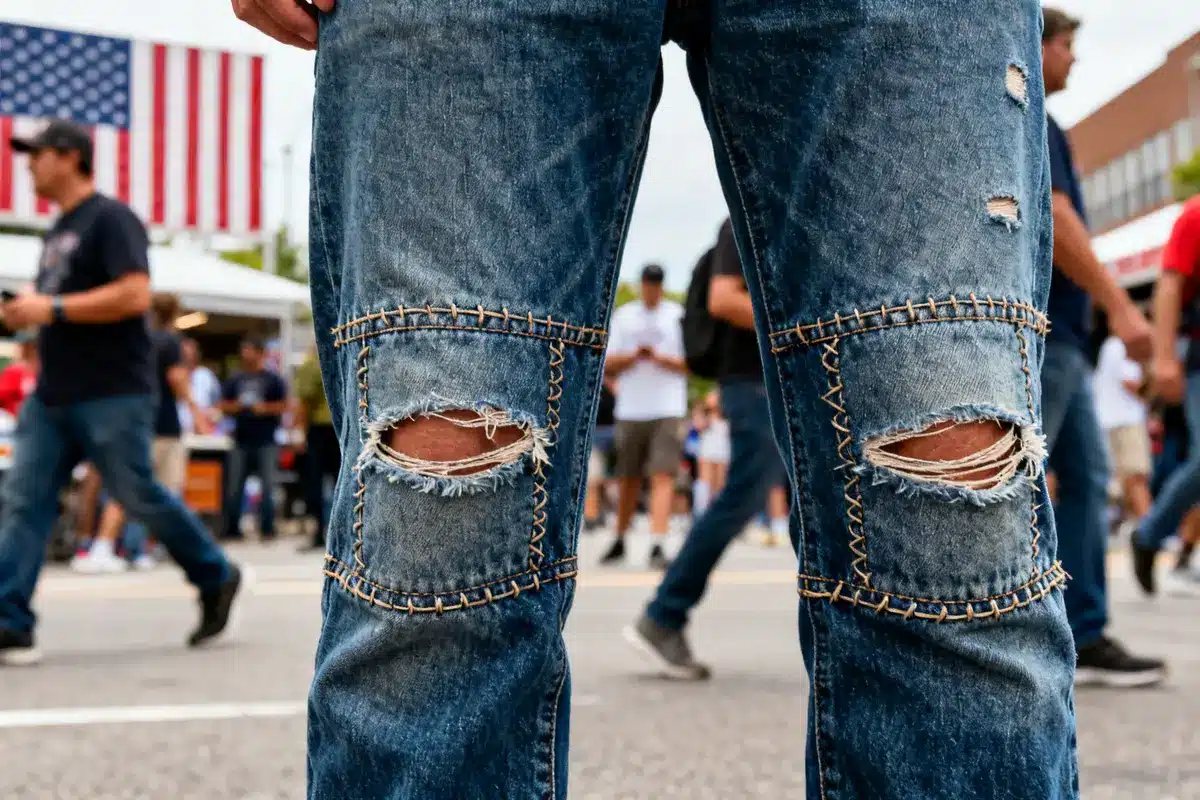
Jeans with knee patches don’t have to look plain. Patches offer a chance to add personality and style. Choose patterns like florals, plaids, or denim in contrasting shades to make the repair a fashion statement. You can even combine different textures like leather or corduroy patches for a unique twist.
Decorative embroidery on or around the patches is another way to customize your jeans. Stitch simple shapes, initials, or fun motifs with colorful thread, enhancing the patched area visually. Visible mending techniques add character and charm, turning repaired jeans into one-of-a-kind pieces.
Try asymmetrical patch placements or multiple smaller patches for a trendy, worn-in look. These styling ideas embrace sustainability while keeping your wardrobe fresh.
🧵 Patch Size Calculator for Jeans With Knee Patches
Calculate the ideal patch size to cover your hole with enough extra fabric for lasting durability.
Care and Longevity for Repaired Jeans
To maintain your jeans with knee patches for the longest time, adopting the right washing method is key. Wash patched jeans inside out using cold water to protect fabric strength and reduce color fading. Hot water can weaken threads and shrink patches, so cold water is best.
Use gentle cycles and avoid harsh detergents to preserve the denim’s integrity and maintain patch adhesion. Line drying or laying flat to dry is preferable over a dryer, which can stress sewn areas and cause fraying.
When ironing, avoid direct heat on the patch area; instead, use a pressing cloth and a medium heat setting to prevent melting any interfacing glue or damage to fabric finishes.
FAQ: jeans with knee patches
What are jeans with holes in the knees called?
Jeans with holes in the knees are commonly called distressed or ripped jeans. The holes give a worn, casual style that is popular in fashion. When repaired with fabric, these become jeans with knee patches to extend their life while maintaining style.
How to add knee patches to jeans?
To add knee patches to jeans, cut a patch at least 1 inch larger than the hole, prepare the area by ironing inside out, then pin and sew the patch inside. Use a zigzag stitch to secure edges and reinforce with a spiral stitch or strong hand stitching for durability.
What jeans not to wear after 40?
Jeans not to wear after 40 typically include overly baggy, extremely distressed, or very tight styles that don't flatter mature figures. Opt for classic cuts with minimal distressing and clean, well-fitted knee patches if repairs are needed for a polished look.
What are the patches on jeans called?
The patches on jeans are called knee patches or repair patches. They are pieces of fabric sewn over holes or worn areas to reinforce and extend the life of the jeans, often made from denim or sturdy materials that match or contrast with the original fabric.

Jack Mercer is a writer with a passion for American culture and everyday style. After spending years exploring the country’s hidden gems and fashion scenes, he found his voice sharing stories that celebrate the authentic spirit of modern America. When he’s not writing, you’ll find him hunting for vintage denim or enjoying a good bourbon on his front porch.