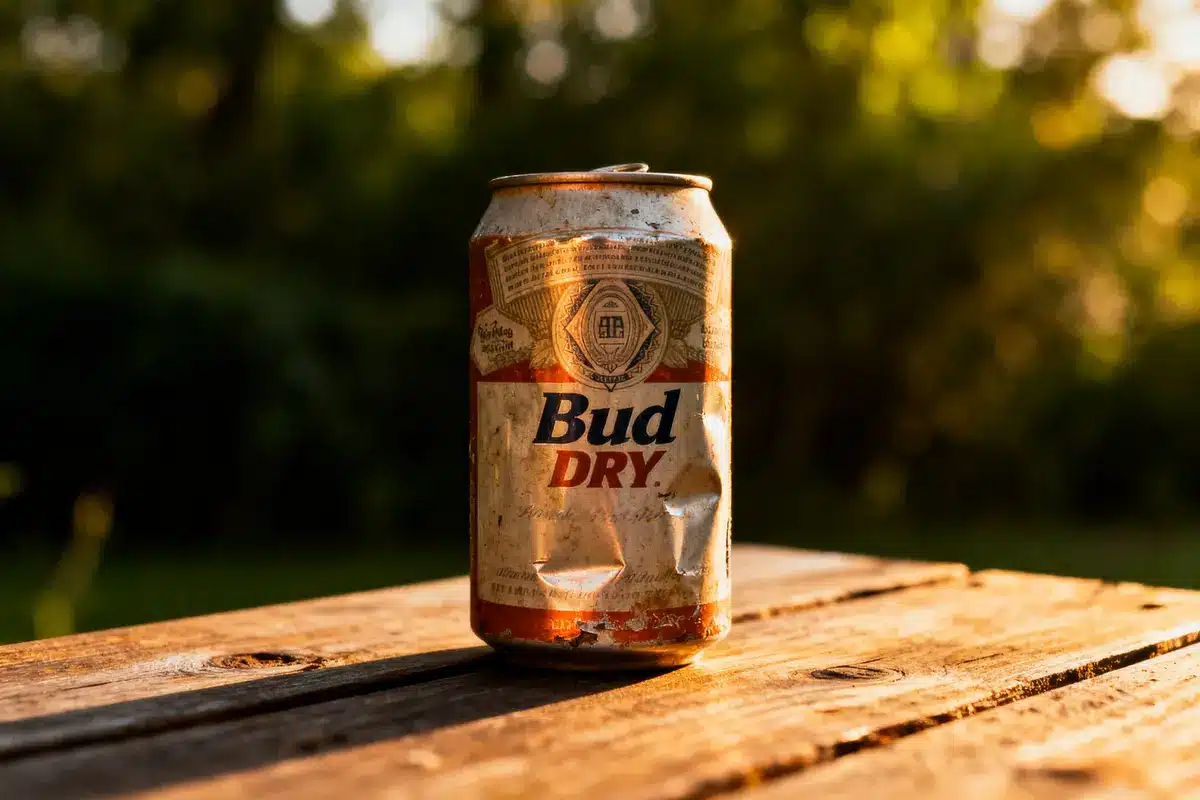
Beer lovers from the 1990s might remember a unique Budweiser product that promised something different from typical light lagers. Bud Dry entered the American beer market when Japanese dry beers were gaining attention, offering drinkers a crisper and less sweet alternative to standard Budweiser. The beer lasted two decades before vanishing from store shelves, leaving behind memories and questions about why it disappeared. Understanding what made this beer special and why it failed helps explain how American drinking habits changed over time.
Quick Summary
- Bud Dry used a special DryBrew process that extended fermentation, creating a drier, crisper taste with less sweetness than regular Budweiser
- Launched nationally in April 1990, the beer competed with Japanese dry lagers and appeared in famous Bud Bowl III commercials during the 1991 Super Bowl
- Competition from Bud Ice (launched 1994) and too many similar Budweiser products confused customers and hurt sales
- Anheuser-Busch discontinued Bud Dry in December 2010 after 20 years due to poor ratings, declining sales, and the rise of craft beer preferences
- The beer remains a nostalgic memory for 1990s drinkers, though the company has shown no interest in bringing it back
Bud Dry: A Look at the Discontinued Beer
The DryBrew Process and Bud Dry’s Signature Finish
Bud Dry stood out from other beers because of something called the DryBrew process. This special brewing method made the beer taste different from regular Budweiser or Bud Light. The DryBrew technique worked by letting yeast fermentation go on longer than usual. This extra time allowed the yeast to eat up more of the leftover sugars in the beer.
When those sugars got converted into alcohol and carbonation, the result was a much drier and crisper taste. Think of it like baking cookies until they’re extra crispy instead of soft and chewy. The longer process created a beer with 5.0% alcohol by volume that finished clean in your mouth without the sweet aftertaste you’d find in other Budweiser products.
August A. Busch led the team that developed this brewing method. The goal was to create a pale lager that competed with Japanese dry lagers that were becoming popular in America. The DryBrew process gave Bud Dry its signature bitter edge and made it stand out as Budweiser’s only venture into highly attenuated, dry beers.
Bud Dry’s Placement in the Budweiser Lineup and Its Rivalry with Bud Ice
Anheuser-Busch positioned bud dry as one of three premier brands in the Budweiser family. It sat right next to the original Budweiser and Bud Light, offering beer drinkers a third choice. While Budweiser had a classic taste and Bud Light went for fewer calories, Bud Dry aimed for people who wanted something more bitter and less sweet.
The competition got tougher when Bud Ice arrived in 1994. This new beer used a crystallization process to create an even crisper taste and packed more alcohol than Bud Dry. The two beers were supposed to appeal to different customers, but they ended up fighting for the same shelf space. Bud Dry fans liked the dry, bitter notes, while Bud Ice attracted drinkers who wanted higher alcohol content and an ice-cold finish.
Over time, Bud Ice started to overshadow Bud Dry in sales. The overlap in their target markets created confusion among shoppers. Both beers promised a crisp, clean taste, but Bud Ice’s stronger marketing push and higher alcohol content gave it an edge that Bud Dry couldn’t match.
Origins and Launch Timeline
The story of Bud Dry began in spring 1989 when Anheuser-Busch tested it in select markets. The company wanted to see how American beer drinkers would react to a drier style of lager. Japanese dry beers had created buzz, and the brewery saw an opportunity to capture that growing interest.
After positive feedback from test markets, the national launch happened in April 1990. The timing matched a shift in American drinking habits. More people were exploring different beer styles beyond the standard light lagers that dominated grocery store coolers.
The beer rolled out across the United States as part of Budweiser’s strategy to offer more variety. Stores stocked it alongside the flagship Budweiser and the lighter Bud Light option. The launch represented Anheuser-Busch’s bet that customers would embrace a beer with less residual sweetness and more bite.
🍺 Bud Dry Era Calculator
Find out how long Bud Dry was available during your lifetime and how many years you could have enjoyed it.
You could have enjoyed Bud Dry for:
Marketing Footprint and Cultural Moments
Bud Dry made a memorable splash during Bud Bowl III in 1991. The beer appeared as the starting quarterback and was called the « Top Draft Choice » for Bud Light’s team. These Bud Bowl commercials aired during the Super Bowl and became a cultural phenomenon in the early 1990s. Millions of viewers watched animated beer bottles play football, and Bud Dry got prime exposure during one of advertising’s biggest stages.
The brand’s tagline was « comes on strong, then it’s gone. » This catchphrase highlighted the beer’s bold initial taste followed by a clean finish without lingering sweetness. Looking back, the slogan turned out to be somewhat prophetic about the product’s own lifespan in the market.
Anheuser-Busch ran print ads and television spots that emphasized the dry brewing process. The marketing materials targeted beer drinkers who considered themselves more adventurous than the average Bud Light customer. The campaigns tried to position Bud Dry as a sophisticated choice for people who appreciated craft and brewing innovation.
Author’s Note
« If you’re hunting for that crisp, bitter finish that Bud Dry delivered, explore modern dry lagers from craft breweries that use extended fermentation techniques similar to the original DryBrew process. »
Market Context and Discontinuation Reasons
By the late 2000s, the American beer market looked completely different from 1990. Craft breweries were exploding in popularity. Beer drinkers wanted unique flavors, local ingredients, and stories behind their drinks. The big breweries faced a tough challenge keeping customers interested in mass-produced lagers.
Anheuser-Busch had created too many similar products. Bud Dry, Bud Ice, Bud Light, regular Budweiser, and several other variations crowded store shelves. This oversaturation confused shoppers who couldn’t figure out what made each beer special. Sales data showed that many of these products were competing against each other instead of winning new customers.
The numbers told a clear story. Beer review platforms gave Bud Dry a score around 57 out of 100, with user ratings averaging just 2.28 out of 5. These ratings reflected declining interest and suggested that even loyal customers weren’t passionate about the product. Declining profits made it hard to justify keeping Bud Dry in production.
In December 2010, Anheuser-Busch quietly discontinued the beer after 20 years. The decision came as part of a broader streamlining of the product portfolio. The company needed to cut underperforming brands and focus resources on winners like Bud Light, which dominated the light beer category.
Legacy, Nostalgia, and What Came After
Some fans remember bud dry fondly and have even started online petitions asking Anheuser-Busch to bring it back. These nostalgia-driven campaigns pop up on social media every few years. People share memories of drinking Bud Dry at college parties, backyard barbecues, and bars that no longer exist. The beer represents a specific time period for drinkers who came of age in the 1990s.
Anheuser-Busch hasn’t shown interest in reviving the brand. The company learned valuable lessons about product differentiation and market positioning from the Bud Dry experiment. Modern beer consumers have moved toward craft options, flavored malt beverages, and hard seltzers. A dry lager from 1990 doesn’t fit current drinking trends.
The discontinuation of Bud Dry reflected bigger changes in how Americans buy beer. Here’s what shifted in the market:
- Craft breweries offered more interesting flavor profiles than mass-produced dry lagers
- Younger drinkers wanted authenticity and local connections to their beverages
- Big breweries struggled to maintain dozens of similar products profitably
- Japanese dry beer trends faded as new styles like IPAs and sour beers gained popularity
Beer historians view Bud Dry as an interesting footnote in American brewing history. It showed that even major corporations with massive marketing budgets can’t force a product to succeed if market conditions aren’t right. The DryBrew process itself was innovative, but innovation alone doesn’t guarantee long-term success.
Today’s craft brewers sometimes experiment with dry lagers and extended fermentation techniques. These small-batch beers offer similar characteristics to what Bud Dry promised: less residual sweetness, crisp finishes, and bold bitter notes. The difference is that craft versions come with more attention to ingredients, brewing precision, and flavor complexity that mass production couldn’t deliver in 1990.
FAQ about Bud Dry
Why was Bud Dry discontinued?
Bud Dry was discontinued in 2010 due to declining profits and increased competition from newer beers like Bud Ice. It faced reduced marketing priority and struggled to differentiate itself in a market that had become crowded with similar products.
What was different about Bud Dry?
What was different about Bud Dry was its unique DryBrew process, which allowed for extended fermentation. This resulted in a drier, crisper taste, setting it apart from sweeter Budweiser products, making it a more bitter option in the Budweiser lineup.
Can you still buy Bud Dry?
You cannot still buy Bud Dry as it was discontinued in December 2010. The beer has not been revived, and Anheuser-Busch has focused on other successful brands within their portfolio, like Bud Light.
What is Bud Dry beer?
Bud Dry beer was a pale lager with 5.0% ABV brewed by Anheuser-Busch, introduced nationwide in the U.S. in April 1990. It featured a dry finish due to its unique brewing process and aimed to cater to drinkers looking for a less sweet beer option.
What type of consumers did Bud Dry target?
Bud Dry targeted consumers looking for a more adventurous beer option compared to Bud Light. It aimed at drinkers wanting a drier, less sweet flavor profile amidst growing interest in unique beer styles during the late 1980s and early 1990s.
How did Bud Dry perform in the market over time?
Bud Dry struggled over time as it lost market share to competitors like Bud Ice, which had better marketing and higher alcohol content. As consumer preferences shifted towards craft brews, Bud Dry’s sales declined, leading to its eventual discontinuation.

Jack Mercer is a writer with a passion for American culture and everyday style. After spending years exploring the country’s hidden gems and fashion scenes, he found his voice sharing stories that celebrate the authentic spirit of modern America. When he’s not writing, you’ll find him hunting for vintage denim or enjoying a good bourbon on his front porch.