Ever wondered how to create the perfect mad hat hatter costume or learn about this iconic character’s fascinating backstory? This complete guide reveals the surprising real-world origins behind Carroll’s beloved character, from dangerous mercury poisoning in hat-making to modern cosplay secrets. You’ll discover authentic costume tips, budget-friendly DIY ideas, and styling tricks that naturally bring this whimsical figure to life, whether you’re planning for Halloween, conventions, or theatrical performances.
Where did the Mad Hatter originate in Carroll’s works?
The mad hat hatter first appeared in Lewis Carroll’s 1865 novel « Alice’s Adventures in Wonderland, » becoming one of literature’s most beloved eccentric characters. This whimsical figure made his debut in Chapter Seven, titled « A Mad Tea-Party, » where Alice stumbles upon an endless tea party hosted by three peculiar companions.
Carroll drew inspiration from the real saying « mad as a hatter, » which existed long before his famous tale. This phrase came from the dangerous mercury poisoning that affected 19th-century hatmakers who used mercury in their felt hat manufacturing process. The toxic exposure often caused erratic behavior and trembling, giving birth to the association between hatters and madness.
The character’s iconic visual appearance stems from John Tenniel’s original illustrations. These drawings showed a tall, thin man wearing an oversized top hat with a distinctive hatband reading « 10/6. » This marking indicated the hat’s price in pre-decimal British currency – exactly 10 shillings and 6 pence.
The character’s first appearances and evolution in the original tales
During Alice’s first encounter with the Hatter, she finds him engaged in a perpetual tea party with the March Hare and the sleepy Dormouse. The trio constantly switches places around their table, trapped in an eternal 6 o’clock teatime because Time itself has stopped speaking to the Hatter.
The character’s behavior in this scene establishes his core traits: asking riddles without answers, making nonsensical personal remarks, and reciting peculiar poetry. His most famous riddle, « Why is a raven like a writing desk? » was originally intended to have no solution, though readers have since created countless clever answers.
Carroll brought the character back in his 1871 sequel « Through the Looking-Glass, » though here he appears under the name « Hatta. » This version shows him as one of the Anglo-Saxon messengers, sipping tea from a large cup while moving in his characteristic jerky manner.
The Cheshire Cat describes both the Hatter and March Hare as completely mad, warning Alice that everyone in Wonderland shares this quality. This revelation helps establish the Hatter as a symbol of the topsy-turvy logic that governs Carroll’s fantastical world.
Mad hat hatter: origins in adaptations and influences
Stage adaptations began appearing shortly after the book’s publication, with Victorian theater productions emphasizing the character’s grotesque and uncanny qualities. These early portrayals focused on the unsettling aspects of his madness rather than the charming whimsy we often see today.
Film and television adaptations have transformed the character significantly over the decades. Each version brings new interpretations while maintaining core elements like the oversized hat, eccentric behavior, and connection to tea parties. Some portrayals lean into steampunk aesthetics, while others emphasize colorful, carnival-like appearances.
The character has also inspired countless artists, writers, and designers who use his image to represent creativity, madness, and rebellion against social conventions. His influence extends far beyond children’s literature into fashion, art, and popular entertainment.
Mad hat hatter-inspired cosplay ideas
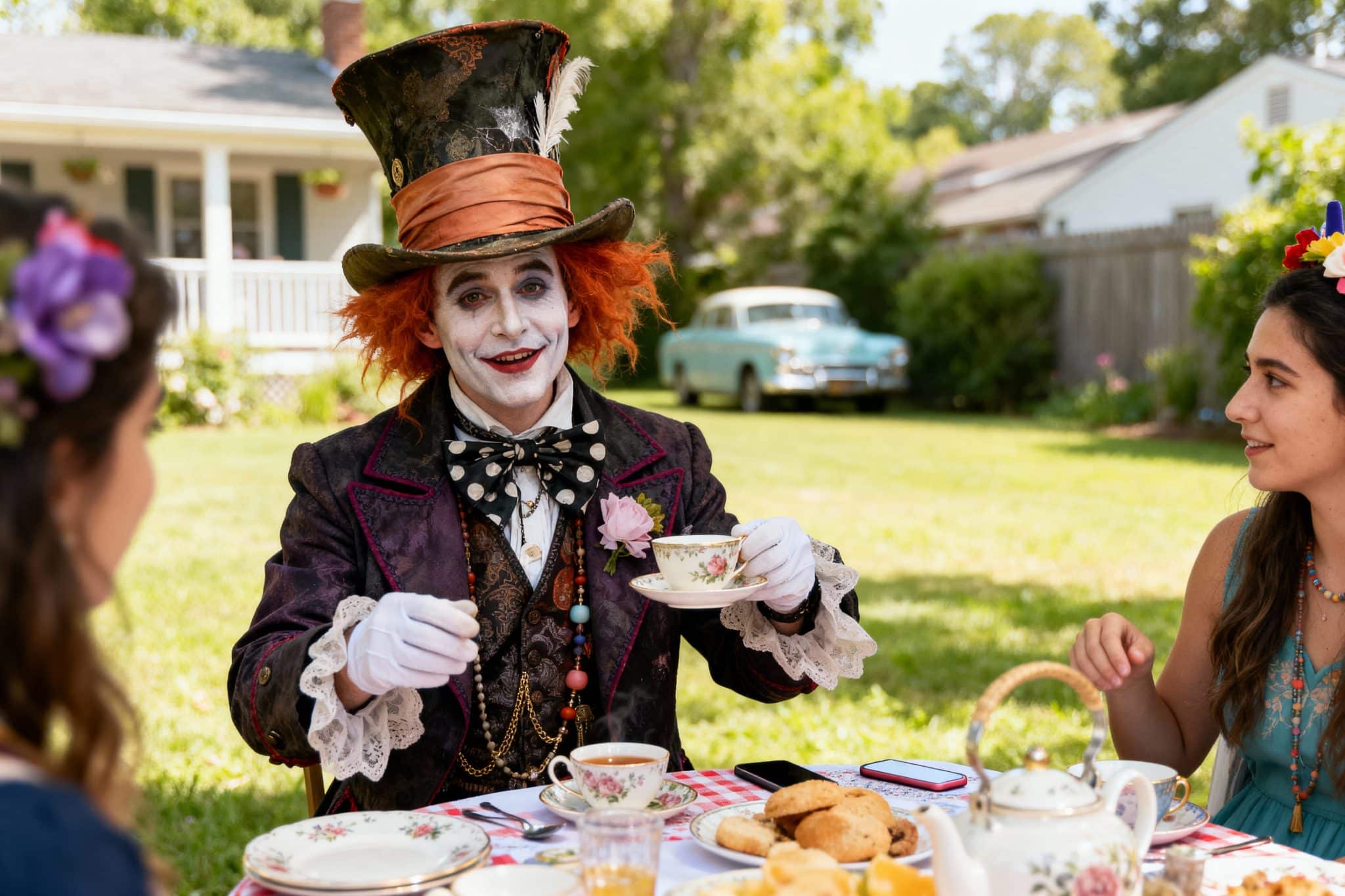
Creating an authentic mad hat hatter costume starts with understanding the character’s essential visual elements. The most recognizable version draws from Tenniel’s illustrations, featuring Victorian-era clothing with whimsical touches that suggest barely contained chaos.
We recommend starting with these core components for a classic interpretation:
- An oversized top hat with « 10/6 » price tag attached to the band
- A mismatched or slightly torn waistcoat in rich colors
- A large bow tie, preferably in a contrasting pattern
- A white dress shirt with ruffled or puffy sleeves
- Dark trousers with suspenders or braces
- Vintage-style boots or formal shoes
For those preferring a more modern interpretation, steampunk elements work beautifully. Add brass gears, pocket watches, and small mechanical trinkets to your hat and clothing. Goggles worn pushed up on the forehead create an inventor-like appearance that fits the character’s creative madness.
Styling the Mad Hatter look
The key to successful Hatter styling lies in controlled chaos – everything should look slightly askew but intentionally so. Your hat might sit at an odd angle, your bow tie could be crooked, and your hair should appear as though you’ve been running your hands through it while pondering impossible riddles.
Makeup can enhance the character’s otherworldly appearance. Pale foundation with dark circles under the eyes suggests sleepless nights spent at tea parties. Adding subtle colored contacts in green or amber creates an unsettling, magical effect.
Hair styling works best when it looks naturally disheveled rather than perfectly messy. We suggest using texturizing spray and working it through with your fingers to create that « just woke up from a strange dream » appearance that suits the character perfectly.
Costume components and styling tips for the look
High-quality materials make a significant difference in achieving an authentic appearance. Wool felt hats provide the proper structure and vintage feel, while leather accessories add durability and historical accuracy. Dorfman Pacific offers excellent wool felt top hat styles that work perfectly for this costume.
When selecting fabrics, choose rich velvets, brocades, and tweeds that reflect Victorian fashion sensibilities. These materials photograph well and maintain their appearance throughout long convention days or costume parties.
Accessories deserve special attention since they tell the character’s story. Vintage pocket watches, ornate tea cups, playing cards, and small bottles labeled with mysterious contents all add narrative depth to your costume. We advise securing these items with hidden safety pins or small chains to prevent loss during events.
Color coordination should feel deliberate yet slightly off-kilter. Rich jewel tones like deep purples, forest greens, and burgundy work well as base colors. Add pops of unexpected brightness through ribbons, feathers, or small decorative elements attached to your hat.
Influences in popular culture and easy cosplay ideas
The Hatter’s presence in modern media continues to evolve, inspiring new generations of fans and costume enthusiasts. Musical theater productions, animated features, and live-action films each contribute unique visual interpretations that cosplayers can draw from for inspiration.
For beginners seeking easy cosplay options, start with the most recognizable elements: the hat and bow tie. Even a simple black top hat decorated with a « 10/6 » card and paired with formal clothing creates an instantly recognizable character. Thrift stores often yield perfect vintage pieces at affordable prices.
Budget-conscious cosplayers can create impressive results using creativity over expensive materials. Cardboard forms the base for elaborate hat decorations, while fabric paint and markers add details to plain clothing. The character’s inherent quirkiness means that handmade, imperfect elements often look more authentic than store-bought perfection.
Group cosplay opportunities abound with this character. Team up with friends as Alice, the March Hare, and Dormouse for a complete tea party ensemble. This approach allows for shared costume creation costs and creates memorable photo opportunities at conventions and events.
Frequently Asked Questions
What does « mad hatter » symbolize?
The « mad hatter » symbolizes the madness and illogical nature inherent in a whimsical world. He represents creativity and challenges to social norms, embodying a topsy-turvy logic that disrupts conventional understanding, as seen in his nonsensical riddles and chaotic tea parties.
Why were Haberdashers mad?
Haberdashers were mad due to mercury poisoning, a consequence of using mercury in the hat-making process during the 19th century. This toxic exposure led to unpredictable behavior and physical tremors, giving rise to the phrase « mad as a hatter » associated with mental instability.
What does 10/6 mean on the Mad Hatter’s hat?
The « 10/6 » on the Mad Hatter’s hat indicates its price in pre-decimal British currency, specifically 10 shillings and 6 pence. This detail not only emphasizes the character’s eccentricity but also provides a glimpse into the historical context of British currency during Carroll’s time.
What was Mad Hatter’s famous line?
The Mad Hatter’s famous line is the riddle, « Why is a raven like a writing desk? » This riddle is notoriously unanswered, highlighting his character’s nonsensical and whimsical nature, which reflects the themes of insanity and disorder within Wonderland.
Where did the Mad Hatter originate in Carroll’s works?
The Mad Hatter originated in Lewis Carroll’s 1865 novel « Alice’s Adventures in Wonderland, » where he first appears in Chapter Seven during an eternal tea party with the March Hare and Dormouse, showcasing his eccentric behavior and sense of whimsy that captures readers’ imaginations.
How has the Mad Hatter’s portrayal evolved in modern adaptations?
The Mad Hatter’s portrayal has evolved significantly across adaptations, with interpretations ranging from grotesque and unsettling in early theater to the colorful and whimsical version seen in contemporary films. Each adaptation reflects shifting cultural perspectives on madness, creativity, and individuality.

Jack Mercer is a writer with a passion for American culture and everyday style. After spending years exploring the country’s hidden gems and fashion scenes, he found his voice sharing stories that celebrate the authentic spirit of modern America. When he’s not writing, you’ll find him hunting for vintage denim or enjoying a good bourbon on his front porch.