Key takeaways:
The Mad Hatter stems from Victorian-era hat making, linking to the real figure Theophilus Carter and the phrase “mad as a hatter” related to mercury poisoning. The distinctive 10/6 price tag on his hat represents a cost in British currency, not a fraction. Literary madness contrasts with historical poisoning symptoms, while iconic scenes like the Mad Tea Party reveal Carroll’s inventive use of social critique and absurdity.
How does a character like the Mad Hatter retain cultural power more than 150 years after its creation? Victorian England’s hat-making trade and mental health perceptions provided fertile ground for Lewis Carroll’s eccentric figure to emerge, embedding layers of historical context and linguistic play. Beyond the mercury poisoning roots, the Hatter’s role in literature and adaptations reveals evolving interpretations tied to social norms and creative expression. Understanding these dimensions offers insight into the Mad Hatter’s lasting symbolism and its multifaceted legacy in popular culture.
Mad Hatter Origins and Real-World Inspirations
Theophilus Carter and Oxford Influences
The Mad Hatter’s origins are deeply tied to Victorian England, where hat making was a serious craft and an important trade. One figure often associated with the inspiration for the character is Theophilus Carter, an eccentric furniture dealer from Oxford. Carter was known for his odd habit of standing in front of his shop wearing a top hat, which led locals to nickname him the « Mad Hatter. » It is rumored that Lewis Carroll’s illustrator, John Tenniel, based his depiction of the Hatter on Carter’s peculiar appearance, linking the character’s visual identity to this real-world figure.
While university records do not confirm Carter worked at Christ Church, Oxford, Carroll’s familiarity with the city and its odd characters certainly influenced the creation of the Hatter. Additionally, Carroll’s uncle, Robert Wilfred Skeffington Lutwidge, was a Lunacy Commissioner who visited asylums and witnessed Victorian mental health treatments firsthand, including the use of non-restraint methods. These real-life encounters with psychological conditions indirectly shaped the Mad Hatter’s literary madness, adding depth to the character’s peculiar behavior.
Interestingly, the phrase “mad as a hatter” predates both Carroll and Carter and reflects a common expression from the era related to mercury poisoning prevalent among hat makers. This phrase partially inspired the character’s name and perceived madness, although the Hatter’s behaviors in the story differ from actual mercury poisoning symptoms.
The 10/6 Hat Tag and Mercury Poisoning
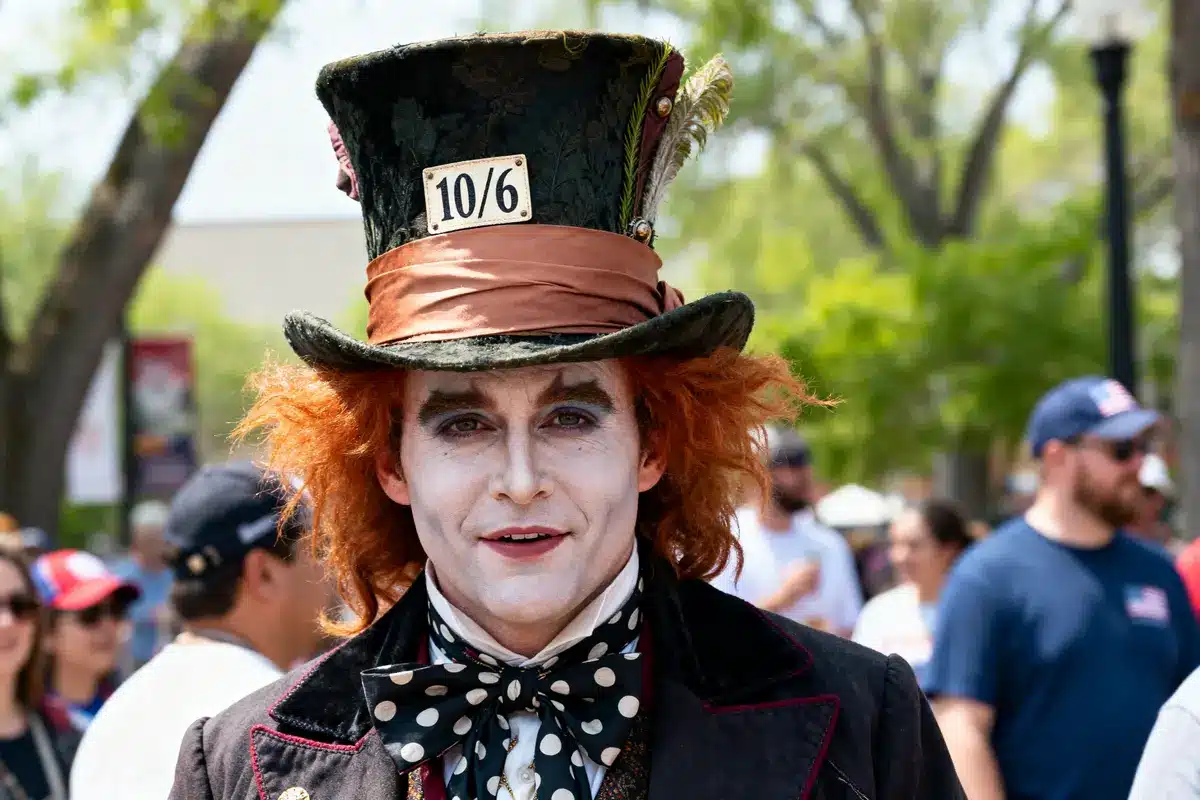
One of the most iconic visual details about the Mad Hatter is the 10/6 price tag pinned to his large top hat. Many fans believe this to be a fraction, but it actually represents the cost of the hat: 10 shillings and 6 pence, which was half a guinea in pre-decimal British currency. This detail clears up a common misconception and firmly places the character in the socio-economic context of 19th-century England, where such labels were typical for shop items.
Mercury was widely used in the felt hat industry during Carroll’s time. Hat makers often suffered from mercury poisoning, which caused tremors, mood swings, and cognitive problems—giving rise to the saying “mad as a hatter.” Scientific and historical studies confirm that many Victorian hatters exhibited these symptoms due to mercury fumes absorbed during manufacture.
Despite the phrase’s origin in mercury poisoning, the Mad Hatter’s madness in Carroll’s books lacks the usual physical symptoms seen in poisoned hatters. The character’s insanity is more a whimsical and literary invention than a medical condition. Carroll’s portrayal emphasizes absurdity, wit, and nonsensical behavior rather than realistic mental illness.
Iconic Moments in Carroll’s Wonderland and Looking-Glass
The Mad Hatter’s most memorable scene occurs at the Mad Tea Party in “Alice’s Adventures in Wonderland.” In this chaotic and fantastical setting, the Hatter, along with the March Hare and Dormouse, hosts an endless tea time stuck at 6:00 pm. The Hatter explains that he once had a friendship with Time, but after offending the entity by “murdering time” with his poor singing, he was cursed to an eternal tea party.
During the tea party, the Hatter’s erratic behavior includes switching seats, posing riddles that have no answers, and reciting strange poems. These antics create a sense of controlled chaos, highlighting Carroll’s love of wordplay and his critique of social norms.
The Hatter reappears in “Through the Looking-Glass” under the name Hatta. Here he is a messenger for the White King and faces legal troubles, though the judicial system in that world often punishes people before any crime is committed. This reflects Carroll’s playful approach to logic and justice in Wonderland. Tenniel’s illustrations show Hatta calmly sipping tea, maintaining the character’s core eccentric charm.
Author’s Note
« Understanding the Mad Hatter requires looking beyond the phrase ‘mad as a hatter’ to the rich interplay of Victorian social history, mental health perceptions, and Carroll’s creative use of language and logic. »
The Hatter Across Adaptations: From Disney to Depp
The Mad Hatter has become a cultural icon and appeared in numerous adaptations, each bringing unique interpretations. The 1951 Disney animated film popularized the Hatter as a bubbly, childlike figure with a booming comical voice, emphasizing his playful insanity and whimsical nature. The « unbirthday party, » a concept introduced by Disney, celebrates any day except one’s actual birthday, offering a joyful twist on the character’s endless tea party.
In contrast, Tim Burton’s 2010 live-action film casts Johnny Depp as the Hatter, giving the character a darker and more emotional arc. Depp’s portrayal is visually striking, with brightly colored hair and theatrical makeup, evoking a mix of eccentricity and vulnerability. Here, the Hatter is named Tarrant Hightopp and is portrayed as an outcast longing for acceptance, blending madness with heartfelt complexity.
Other adaptations have included television versions, stage performances, and video games where the Hatter’s role often swings between comic relief and a deeper symbol of madness or rebellion. These versions explore not only the Hatter’s quirks but also his relationships with Alice and other Wonderland characters, reinforcing his status as a beloved literary and pop culture figure.
The Hatter’s Riddle and Its Afterlife
One of the Mad Hatter’s most famous contributions to the story is his enigmatic riddle: “Why is a raven like a writing desk?” Carroll originally intended the riddle to have no answer, using it as an example of nonsense and playful linguistic trickery. This open-endedness invites readers to think creatively rather than logically, fitting the overall tone of Wonderland.
Due to popular demand, Carroll later offered a whimsical answer involving the “few notes” produced by a writing desk and the idea that the word “nevar” is “raven” spelled backward. Over time, many alternative answers have been proposed, from literary allusions to Edgar Allan Poe to humorous puns, ensuring the riddle remains a staple of Carrollian lore.
The riddle has transcended literature to become a cultural touchstone referenced in various media, including horror novels and puzzles. Its continuing popularity highlights the Mad Hatter’s role as a symbol of curiosity, absurdity, and the playful limits of language.
Language, Legacy, and Cultural Impact
The Mad Hatter’s character has made a lasting impression on language and culture. The expression “mad as a hatter” remains a common idiom, though its original connection to mercury poisoning is often forgotten. Carroll’s reinterpretation of the phrase added a literary layer, reflecting a type of madness grounded in surreal humor rather than medical diagnosis.
The character has inspired everything from fashion trends to psychological studies on eccentricity and creativity. Hat-themed shops, costume designs, and even idioms like “Mad Hatter syndrome” in modern medicine owe roots to the original Hatter and his cultural perch.
His presence is visible in art, music, and stage productions worldwide, symbolizing nonconformity and the magic of imagination. The Mad Hatter reminds us how language and symbolism can shift from everyday trade practices and health issues to timeless literary figures who continue to spark wonder and debate.
🧢 Mad Hatter Symbolism Quiz
Find out which aspect of the Mad Hatter you relate to most, from eccentricity to wit!
FAQ: mad hatter
Why did the Mad Hatter become a villain?
The Mad Hatter is not originally a villain but a whimsical and eccentric character. Some adaptations depict him as a villain to add depth or conflict, but in Lewis Carroll’s works, he is more of a chaotic trickster than a traditional antagonist.
What mental disorder does the Mad Hatter represent?
The Mad Hatter does not represent a specific mental disorder. His « madness » is a literary invention inspired partly by mercury poisoning in Victorian hat makers but portrayed with whimsical, nonsensical behavior rather than real medical symptoms.
Was the Mad Hatter good or bad?
The Mad Hatter was neither strictly good nor bad in Carroll’s books. He is portrayed as an eccentric, unpredictable character whose actions create confusion and humor but are not malevolent or harmful.
What was the Mad Hatter known for?
The Mad Hatter was known for his eccentric behavior, his endless tea party stuck at 6:00 pm, and the famous riddle, “Why is a raven like a writing desk?” His iconic 10/6 price tag on his hat links him to Victorian hat-making traditions.

Jack Mercer is a writer with a passion for American culture and everyday style. After spending years exploring the country’s hidden gems and fashion scenes, he found his voice sharing stories that celebrate the authentic spirit of modern America. When he’s not writing, you’ll find him hunting for vintage denim or enjoying a good bourbon on his front porch.